Tag: ECSE

  • Looking South: African Insights for the OECS Capital Ecosystem

    Looking South: African Insights for the OECS Capital Ecosystem

    Post 4 of 4 – Reimagining the Capital Ecosystem of the OECS

    Author: Tony Regisford

    Reading time: 9 minutes

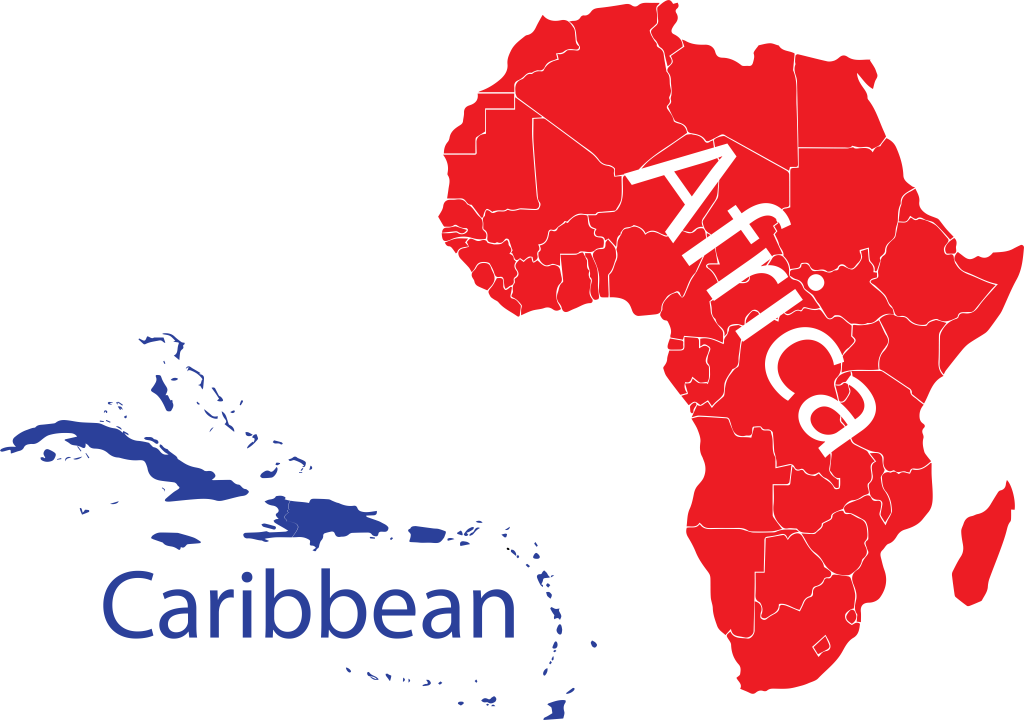
    I acknowledge that the OECS is already doing some good work to fix gaps in the capital market, but in this post, I want to test some other ideas and see what might actually work for us. To do that, I looked into three relatively small states: Botswana, Mauritius, and Rwanda.

    I picked these three because they seem like pretty good parallels for the OECS. They aren’t the biggest or richest economies in Africa, and they don’t have the most natural resources, but they’ve all built capital markets that support their businesses in ways we can learn from.

    One thing to keep in mind is that each of these countries has a larger population than the entire OECS—even if you count our diaspora. Rwanda has over 14 million people, Botswana has 2.6 million, and Mauritius has 1.2 million. The OECS only has around 700,000 residents. So, they are bigger, but not so big that their success should be impossible for us if we look at the OECS and the diaspora as one big group.

    Botswana: Pension Funds

    Botswana’s market is built on a strong base of local institutional investors. Their big pension funds put money into local stocks, which creates a steady demand for shares in banks and retail. This basically creates a “floor” for stock prices, so things don’t crash as hard during bad times. It also gives companies the confidence to list their shares because they know there are buyers.

    In the OECS, a lot of our national pension funds are invested in markets outside our region. The ECSE gets some of that money, but it’s mostly for government bonds. Almost none of our pension funds go into private OECS businesses.

    Here’s the problem: we’re using our own money to help businesses grow in other countries because we don’t have a regulated way to put pension money into OECS SMEs (the smaller, growing businesses that aren’t on the ECSE yet). There’s no pipeline of companies ready for investment and no real incentive for pension funds to look locally.

    In Botswana, pension funds are starting to look at SMEs, but it’s a slow process—currently, less than 2% of assets go to unlisted local equities. The government is pushing for more and the stock exchange is launching an SME fund, so while they have the same struggles we do (like caution and a lack of options), they are at least moving in the right direction.

    Mauritius: Connecting to the World

    Right now, the ECSE isn’t linked to any other exchange, which means less liquidity and fewer people looking at OECS companies. I don’t know why it’s set up this way—maybe there are risks I don’t know about—but we should ask: why not link up with Trinidad, Jamaica, or Barbados?

    Linking exchanges would give OECS SMEs access to more investors, making it easier to raise money to grow. It also helps spread out the risk; investors wouldn’t be stuck in one market.

    The Caribbean Private Sector Organization (CPSO) has been pushing for a regional exchange for a while. In July 2025, they announced that PricewaterhouseCoopers (PwC) is doing a study to see if a regional exchange for CARICOM is possible. While I think this is a great move, I’m a bit worried about how long these studies take. Quite often we identify the gap, commission a study, and then inertia takes over.

    I’m hoping the study comes back with a model we can implement quickly. The benefits seem obvious: better capital flow, less risk, and lower costs for businesses.

    The Mauritius Stock Exchange shows what happens when a small exchange connects to the rest of the world. They are part of the African Exchanges Linkage Project (AELP), which connects seven African exchanges. This gives them access to roughly 2,000 companies and US$1.5 trillion in market capitalisation.

    The way it works is simple: a broker in one country can execute a trade on another exchange through a shared platform. Plus, Mauritius has a great credit rating and a stable reputation, which helps them attract funds from across the continent.

    A “Caribbean version” of this would be transformative. We don’t need to merge all our exchanges; we just need to link them. That would make OECS companies much more visible to international investors.

    Rwanda: Governance and Innovation

    Rwanda’s transformation is basically the result of the government being intentional about good governance and long-term planning. This is especially evident in their capital market. The Rwanda Stock Exchange (RSE) was launched in 2011 and focused on building trust and having strong regulations.

    The results are impressive. In 15 years, the RSE has handled over US$20 billion—which is 133% of Rwanda’s GDP. They’ve raised US$1.87 billion for infrastructure and business, and 95% of their 270,000 investors are local Rwandans.

    The notable part is that Rwanda built this from scratch. In 2008, they were literally using whiteboards and markers. Now, they have over 100 listed securities. They even have a “regulatory sandbox” that lets fintech startups test new products in a controlled environment. They also have a specific platform for SMEs that’s been around since 2013 and are looking into “Green Exchange” options for sustainable finance.

    Jamaica’s Junior Stock Exchange is a great example of how a dedicated SME platform can work. It started in 2009 because SMEs were struggling with prohibitively high debt costs (some as high as 40%). Turning to equity capital became a much better alternative.

    Rwanda proves that a market doesn’t have to be huge to work. You just need credibility, discipline, and a clear vision.

    Diaspora Bonds

    One last thing: all three of these countries found ways to get their diaspora to invest. Botswana uses diaspora bonds for infrastructure, Mauritius has investment vehicles for its expats, and Rwanda makes diaspora engagement a core part of its strategy.

    In post 1, I mentioned that about EC$1.27 billion in remittances flows into the OECS every year. Most of that just goes toward spending (consumption), not investing. We should explore a diaspora bond or an equity vehicle to provide the patient capital that the OECS SMEs really need.

    Conclusion

    Throughout this series, I’ve argued that the OECS capital market isn’t working for growing SMEs, but we have the tools to fix it.

    Post 1 diagnosed the problem: our exchange serves government debt but not SMEs, and remittances are trapped in consumption. Post 2 looked at equity crowdfunding, and Post 3 looked at blended solutions like guarantees and grants. In this final post, I looked at Botswana, Mauritius, and Rwanda to see what we can learn.

    We can’t just copy their models wholesale, but the principles work: use local institutional investors, link exchanges to create liquidity, focus on good governance, and tap into the diaspora.

    The OECS Treaty promised a better life for people in the region, and SMEs are a huge part of making that happen. If we build a capital market that supports them, they can employ more people and drive innovation in our region.

    Questions for You

    If the ECSE linked to other Caribbean exchanges, would you be more likely to invest or list?

    Would you invest in an OECS company through a diaspora equity platform, even if it was not based in your home country?

    Which of these three ideas do you think is most realistic for the OECS?

    What Comes Next

    This is the final post of the Capital Ecosystem series, but it is not the end of the conversation.

    In a follow-up post, I want to step back and ask a question that has been lurking beneath the surface of this entire series: why, despite all these examples and all this evidence, have we not moved further?

    Part of the answer, I suspect, lies in the pervasiveness of the family business model in the OECS. It works—for the families. It has built wealth, sustained communities, and created jobs. On the downside, it also creates a culture of risk aversion, reluctance to separate ownership from management, and resistance to outside equity.

    I will write about this in my next post.

    For now, I leave you with this: the African parallel is not a road map. It is a guide to what is possible.

    Footnote: The views expressed in this post are mine alone, as Tony Regisford, and do not represent any organisation I work for or am associated with, including the St. Vincent and the Grenadines Chamber of Industry and Commerce, the OECS Business Council, and the Caribbean Network of Chambers of Commerce (CARICHAM).

  • The Missing Middle: Can the Eastern Caribbean Securities Exchange  (ECSE) Serve Growth‑Stage SMEs?

    The Missing Middle: Can the Eastern Caribbean Securities Exchange  (ECSE) Serve Growth‑Stage SMEs?

    Post 2 of 4 – Reimagining the Capital Ecosystem of the OECS

    Author: Tony Regisford

    Reading time: 8 minutes

    This post is about the missing middle: growth‑stage small enterprises.

    Think of a business with 10 to 49 employees. It has revenue, a track record, a good customer base, experienced staff, and a solid product. The owner is ambitious.

    She needs short-term working capital to fill some larger orders, and she also has expansion plans – new equipment, a bigger space. In all, she needs EC$300,000. That is more than she can put together on her own.

    She is skeptical about trying a commercial bank. Collateral requirements. High interest rate. She suspects that the repayment period will be too short for her business cycle.

    So she does what many other businesses in that position do. She stalls and remains small.

    There is good news. In 2023, the Eastern Caribbean Securities Regulatory Commission (ECSRC) approved the Securities (Crowdfunding) Rules and opened a Regulatory Sandbox. Two platforms are now in testing.

    The question now is, how do we make what the ECSRC has done work for our SMEs.

    What Equity Crowdfunding Can Do

    Equity crowdfunding is a legitimate capital market instrument. It is one of the tools that can help growth-stage companies to move to the next level of growth. It suits businesses with a compelling narrative and a product the public likes. Not every SME in the OECS fits that profile, but enough of them do. For those that do not fit the crowdfunding profile, I will explore blended solutions in the next post.

    How Crowdfunding Differs from a Bank Loan

    An investor can participate with a modest amount, typically far less than that required for private equity or venture capital. That opens the door to regional and diaspora investors. The regulatory requirements are lighter because the Crowdfunding Rules 2023 were designed for MSMEs. A successful crowdfunding round gets a business used to being transparent, accountable, and investor‑ready. This is the same discipline a future ECSE listing would demand.

    Typical Roadblocks

    These are the typical roadblocks I have been advised about when operationalising a crowdfunding platform:

    Investor onboarding is one. Know Your Customer (KYC) and Anti‑Money Laundering (AML) complexity, remote verification, and trust all create barriers – especially for diaspora investors.

    MSME readiness is another challenge. Many businesses lack audited financials, strong business plans, or sound governance.

    Legal friction can slow things down too: Legal Entity Identifier (LEI) requirements for project owners, Key Investment Information Sheet (KIIS) documentation rules, and investor caps all add layers of complexity.

    The absence of a secondary market also reduces willingness to invest. Early investors have no way to exit.

    Passporting is another hurdle. Harmonised laws exist, but operational mutual recognition across eight territories takes time.

    Platform capitalisation remains a concern. Under‑funded platforms fail.

    The experts that I have spoken to believe that these are solvable problems, but they require coordinated action between regulators, platform developers, and the private sector.

    The ArawakX Cautionary Tale

    Worthy of mention is the failure of the Bahamas’ first crowdfunding platform. I did a bit of research into the “why” and this is what I found:

    Insolvency and Financial Mismanagement

    The Securities Commission of The Bahamas found that ArawakX was insolvent to the tune of $2.4 million. There was a pattern of commingling client and company monies, suggesting that client funds were used to finance the platform’s operations and pay staff salaries – a fundamental breach of fiduciary duty. The platform also failed to settle debts, including a $28,000 invoice from its portal provider, CrowdEngine, which eventually cut off its services due to non‑payment.

    Regulatory Breaches and Legal Consequences

    The company was accused of governance irregularities, regulatory breaches, and possible criminal infractions. The Chief Justice noted that some breaches warrant criminal penalties and found there was more than sufficient evidence to justify the appointment of a provisional liquidator. The platform and its parent company also carried out an unauthorised public offering of their own shares, which is a criminal offence under the Securities Industry Act, the legislation that governs securities markets in the Bahamas.

    Governance Failures and Misconduct

    The platform’s principals were accused of failing to co‑operate with the liquidators and of setting up a similar, unregulated operation in the United States. Several whistleblowers, including a former Securities Commission executive director, raised concerns about how the company was being run, including excessive spending and a lack of proper controls.

    The Human Cost – Investor Losses

    Nearly 900 Bahamians lost their entire investment in a Red Lobster franchise crowdfunding raise, totalling $90,384. Over 100 investors who directly invested in ArawakX itself are also facing a total loss. The company now insolvent and $2 million in claims remain unpaid.

    Important for Us – OECS

    The ArawakX failure should be taken as a regional lesson.

    A platform must be adequately funded from the start and not rely on future revenue to cover its current costs.

    There must be strict separation of client funds from operational funds, proper financial controls, and transparent operations.

    The Securities Commission of The Bahamas took decisive action, which was ultimately supported by the courts.

    The loss of hundreds of small investors can set back the entire concept of equity crowdfunding for years, eroding public trust. The region has seen this before. CLICO and BAICO left thousands of people with nothing. If crowdfunding fails the same way, it will be another reason for people like me to believe that the system is not for us.

    The above addresses the fundamentals of adequate capitalisation, good governance, regulatory oversight, and investor protection.

    ArawakX squandered an opportunity while potentially damaging the credibility of crowdfunding across the Caribbean.

    The Cost of Delay

    Even without a collapse, delaying an OECS crowdfunding platform carries a cost. I fully accept and understand why the I’s must be dotted and the T’s crossed. Still, we must not let caution become inertia. The longer an OECS crowdfunding platform takes to become operational, the longer these opportunities go abegging.

    EC$1.27 billion in annual diaspora remittances will continue to flow into consumption only.

    SMEs that need EC$50,000 to EC$1 million have nowhere to turn and will continue to stay small or die.

    There will be no opportunity for a successful entrepreneur in Antigua to back a promising start‑up in Grenada through a properly regulated channel.  His capital remains siloed.

    Without a middle tier, the ECSE remains a market for government debt and a handful of banking stocks.

    Let’s make this happen. The longer we wait, the more we lose!

    Things for you to consider/answer as an SME owner or potential investor:

    Would you consider raising equity through a crowdfunding platform and if not, what would hold you back?

    If you wanted to invest in an OECS SME growth-company, would you do so using a crowdfunding platform?

    Do the identified missed opportunities resonate with you?

    Next Post: Beyond Commercial Banking – Blended Solutions for OECS Entrepreneurs.

    In the next post I will explore blended solutions – guarantees, first‑loss provisions, patient capital vehicles – for businesses that are not ready for equity crowdfunding but have outgrown commercial bank lending.

    But for now, I urge the private sector to show up. Let’s get the existing crowdfunding framework operational.

    Leave a comment or contact me directly: tony@tonyregisford.com

    Footnote: This is my personal commentary. The views expressed in this post are mine alone, as Tony Regisford, and do not represent any organisation I work for or am associated with, including the St. Vincent and the Grenadines Chamber of Industry and Commerce, the OECS Business Council, and the Caribbean Network of Chambers of Commerce (CARICHAM).