Post 4 of 4 – Reimagining the Capital Ecosystem of the OECS
Author: Tony Regisford
Reading time: 9 minutes
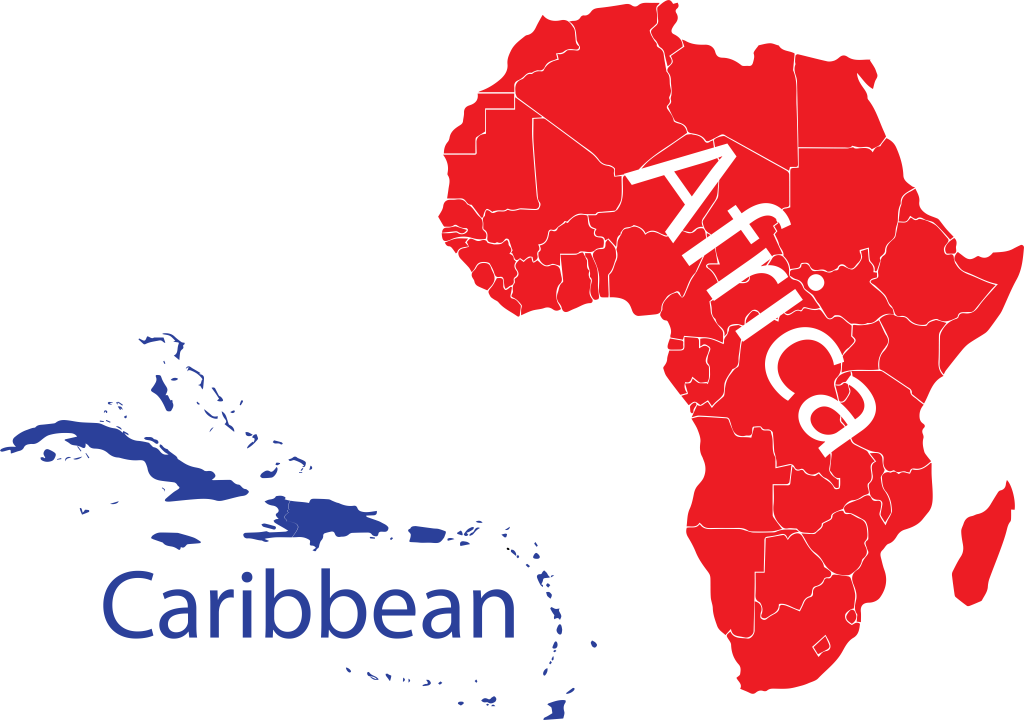
I acknowledge that the OECS is already doing some good work to fix gaps in the capital market, but in this post, I want to test some other ideas and see what might actually work for us. To do that, I looked into three relatively small states: Botswana, Mauritius, and Rwanda.
I picked these three because they seem like pretty good parallels for the OECS. They aren’t the biggest or richest economies in Africa, and they don’t have the most natural resources, but they’ve all built capital markets that support their businesses in ways we can learn from.
One thing to keep in mind is that each of these countries has a larger population than the entire OECS—even if you count our diaspora. Rwanda has over 14 million people, Botswana has 2.6 million, and Mauritius has 1.2 million. The OECS only has around 700,000 residents. So, they are bigger, but not so big that their success should be impossible for us if we look at the OECS and the diaspora as one big group.
Botswana: Pension Funds
Botswana’s market is built on a strong base of local institutional investors. Their big pension funds put money into local stocks, which creates a steady demand for shares in banks and retail. This basically creates a “floor” for stock prices, so things don’t crash as hard during bad times. It also gives companies the confidence to list their shares because they know there are buyers.
In the OECS, a lot of our national pension funds are invested in markets outside our region. The ECSE gets some of that money, but it’s mostly for government bonds. Almost none of our pension funds go into private OECS businesses.
Here’s the problem: we’re using our own money to help businesses grow in other countries because we don’t have a regulated way to put pension money into OECS SMEs (the smaller, growing businesses that aren’t on the ECSE yet). There’s no pipeline of companies ready for investment and no real incentive for pension funds to look locally.
In Botswana, pension funds are starting to look at SMEs, but it’s a slow process—currently, less than 2% of assets go to unlisted local equities. The government is pushing for more and the stock exchange is launching an SME fund, so while they have the same struggles we do (like caution and a lack of options), they are at least moving in the right direction.
Mauritius: Connecting to the World
Right now, the ECSE isn’t linked to any other exchange, which means less liquidity and fewer people looking at OECS companies. I don’t know why it’s set up this way—maybe there are risks I don’t know about—but we should ask: why not link up with Trinidad, Jamaica, or Barbados?
Linking exchanges would give OECS SMEs access to more investors, making it easier to raise money to grow. It also helps spread out the risk; investors wouldn’t be stuck in one market.
The Caribbean Private Sector Organization (CPSO) has been pushing for a regional exchange for a while. In July 2025, they announced that PricewaterhouseCoopers (PwC) is doing a study to see if a regional exchange for CARICOM is possible. While I think this is a great move, I’m a bit worried about how long these studies take. Quite often we identify the gap, commission a study, and then inertia takes over.
I’m hoping the study comes back with a model we can implement quickly. The benefits seem obvious: better capital flow, less risk, and lower costs for businesses.
The Mauritius Stock Exchange shows what happens when a small exchange connects to the rest of the world. They are part of the African Exchanges Linkage Project (AELP), which connects seven African exchanges. This gives them access to roughly 2,000 companies and US$1.5 trillion in market capitalisation.
The way it works is simple: a broker in one country can execute a trade on another exchange through a shared platform. Plus, Mauritius has a great credit rating and a stable reputation, which helps them attract funds from across the continent.
A “Caribbean version” of this would be transformative. We don’t need to merge all our exchanges; we just need to link them. That would make OECS companies much more visible to international investors.
Rwanda: Governance and Innovation
Rwanda’s transformation is basically the result of the government being intentional about good governance and long-term planning. This is especially evident in their capital market. The Rwanda Stock Exchange (RSE) was launched in 2011 and focused on building trust and having strong regulations.
The results are impressive. In 15 years, the RSE has handled over US$20 billion—which is 133% of Rwanda’s GDP. They’ve raised US$1.87 billion for infrastructure and business, and 95% of their 270,000 investors are local Rwandans.
The notable part is that Rwanda built this from scratch. In 2008, they were literally using whiteboards and markers. Now, they have over 100 listed securities. They even have a “regulatory sandbox” that lets fintech startups test new products in a controlled environment. They also have a specific platform for SMEs that’s been around since 2013 and are looking into “Green Exchange” options for sustainable finance.
Jamaica’s Junior Stock Exchange is a great example of how a dedicated SME platform can work. It started in 2009 because SMEs were struggling with prohibitively high debt costs (some as high as 40%). Turning to equity capital became a much better alternative.
Rwanda proves that a market doesn’t have to be huge to work. You just need credibility, discipline, and a clear vision.
Diaspora Bonds
One last thing: all three of these countries found ways to get their diaspora to invest. Botswana uses diaspora bonds for infrastructure, Mauritius has investment vehicles for its expats, and Rwanda makes diaspora engagement a core part of its strategy.
In post 1, I mentioned that about EC$1.27 billion in remittances flows into the OECS every year. Most of that just goes toward spending (consumption), not investing. We should explore a diaspora bond or an equity vehicle to provide the patient capital that the OECS SMEs really need.
Conclusion
Throughout this series, I’ve argued that the OECS capital market isn’t working for growing SMEs, but we have the tools to fix it.
Post 1 diagnosed the problem: our exchange serves government debt but not SMEs, and remittances are trapped in consumption. Post 2 looked at equity crowdfunding, and Post 3 looked at blended solutions like guarantees and grants. In this final post, I looked at Botswana, Mauritius, and Rwanda to see what we can learn.
We can’t just copy their models wholesale, but the principles work: use local institutional investors, link exchanges to create liquidity, focus on good governance, and tap into the diaspora.
The OECS Treaty promised a better life for people in the region, and SMEs are a huge part of making that happen. If we build a capital market that supports them, they can employ more people and drive innovation in our region.
Questions for You
If the ECSE linked to other Caribbean exchanges, would you be more likely to invest or list?
Would you invest in an OECS company through a diaspora equity platform, even if it was not based in your home country?
Which of these three ideas do you think is most realistic for the OECS?
What Comes Next
This is the final post of the Capital Ecosystem series, but it is not the end of the conversation.
In a follow-up post, I want to step back and ask a question that has been lurking beneath the surface of this entire series: why, despite all these examples and all this evidence, have we not moved further?
Part of the answer, I suspect, lies in the pervasiveness of the family business model in the OECS. It works—for the families. It has built wealth, sustained communities, and created jobs. On the downside, it also creates a culture of risk aversion, reluctance to separate ownership from management, and resistance to outside equity.
I will write about this in my next post.
For now, I leave you with this: the African parallel is not a road map. It is a guide to what is possible.
Footnote: The views expressed in this post are mine alone, as Tony Regisford, and do not represent any organisation I work for or am associated with, including the St. Vincent and the Grenadines Chamber of Industry and Commerce, the OECS Business Council, and the Caribbean Network of Chambers of Commerce (CARICHAM).
Leave a Reply